

Introduction
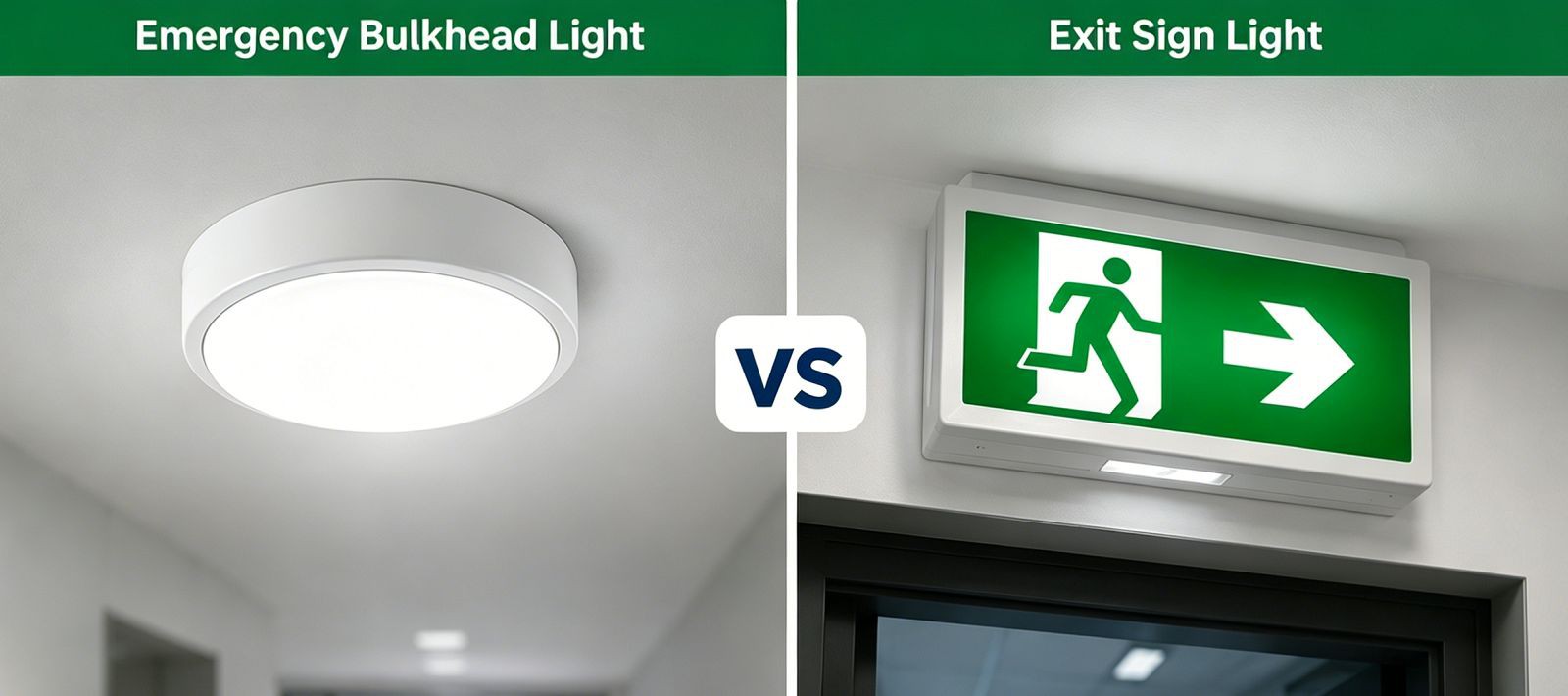
Emergency lighting is essential for commercial, industrial, and public buildings because it helps maintain visibility and improve evacuation safety during power failures or emergency situations. Among the most common emergency lighting products are emergency bulkhead lights and exit sign lights. Although both are designed for safety applications, they serve different purposes and are used in different installation environments. Understanding the differences between these two lighting solutions can help businesses select the most suitable emergency lighting system for their projects.
What Is an Emergency Bulkhead Light?
An emergency bulkhead light is a durable emergency lighting fixture designed to provide illumination during power outages and emergency situations. These lights are commonly installed in corridors, stairwells, parking garages, warehouses, tunnels, and outdoor areas where reliable emergency visibility is required. Modern emergency bulkhead lights are typically designed with waterproof and dustproof protection, impact-resistant housings, energy-efficient performance, and long operational lifespan, making them suitable for both indoor and outdoor commercial environments.

What Is an Exit Sign Light?
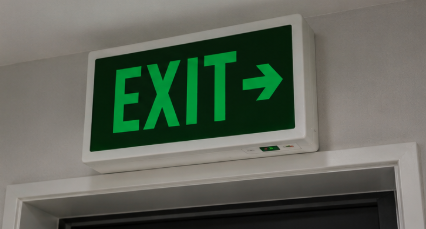
An exit sign light is a safety signage lighting fixture designed to guide people toward evacuation routes and emergency exits during emergencies or power failures. These lights are usually installed above doors, hallways, staircases, and escape routes to improve directional visibility in low-light environments. Most exit sign lights feature illuminated symbols, arrows, or EXIT text to help occupants quickly identify safe evacuation directions while complying with building safety regulations.
Emergency Bulkhead Light vs Exit Sign Light: Key Differences
The table below summarizes the key differences between emergency bulkhead lights and exit sign lights across several important aspects.
|
Factor |
Emergency Bulkhead Light |
Exit Sign Light |
|
Primary Function |
Provides emergency illumination for escape routes and surrounding areas |
Identifies exit locations and guides people toward safety exits |
|
Mounting Location |
Corridors, stairwells, corners, along both sides of escape routes |
Above exit doors, corridor intersections, and key decision points |
|
Lighting Type |
Flood illumination covering large areas |
Self-luminous or backlit sign, illuminates only the sign itself |
|
Ingress Protection |
IP65 waterproof + IK08/IK10 impact resistant |
Typically used in indoor environments with standard protection requirements |
|
Backup Power |
Built-in battery or centralized backup power system |
Built-in battery or centralized power supply, stays illuminated |
|
Special Features |
Motion sensor option, status indicator options |
Directional arrows (left/right/both), multi-language options |
|
Typical Applications |
Commercial and industrial emergency lighting areas |
Emergency exit guidance and evacuation routes |
Which One Do You Need for Your Facility?
The answer depends on your facility type and what you are trying to achieve. Use this simple guide to determine what you need.
You need an exit sign light if:
- You have a door that serves as an emergency exit
- You have a corridor intersection where people need direction
- Your local fire code requires illuminated exit identification
You need an emergency bulkhead light if:
- You have a pathway, corridor, or stairwell that people must travel to reach an exit
- Your facility operates in outdoor, damp, or high-impact environments
- You need to illuminate steps, ramps, or changes in floor level
You need both if:
- You are outfitting a commercial building, industrial facility, or multi-family residential structure
- You want a fully code-compliant emergency egress system
How to Ensure Your Emergency Lighting Is Code Compliant
Meeting code requirements is essential for safety and legal compliance. Here are the key steps to ensure your emergency lighting system passes inspection.
Understand the applicable codes
Different regions and building types follow different standards. NFPA 101 (Life Safety Code) is widely used in North America. The International Building Code (IBC) applies in many jurisdictions. China follows GB standards. Identify which codes govern your facility.
01
Map your egress paths
Every exit door, corridor intersection, change in direction, and stairwell must be covered. Exit signs must be visible from any approach direction. Emergency bulkhead lights must illuminate the entire path – no dark spots.
02
Verify illumination levels
Most codes require a minimum light level (typically 1 foot-candle at floor level) along the egress path. Emergency bulkhead lights should be spaced so that light overlaps, avoiding gaps or shadows.
03
Check backup power duration
Both exit signs and emergency bulkhead lights must remain illuminated for the required duration during a power failure. Verify battery ratings and test your system regularly.
04
Consult a professional
Local amendments can change requirements. When in doubt, work with a licensed electrical engineer or fire safety professional who knows your local codes.
05
Conclusion
Emergency bulkhead lights and exit sign lights serve different but complementary safety functions. Exit signs identify exit locations; emergency bulkhead lights illuminate escape paths. Most facilities need both. Code compliance requires understanding applicable standards, mapping egress paths, verifying illumination levels, and testing backup power duration. Toppo Lighting offers IP65-rated emergency bulkhead lights with IK08/IK10 impact resistance, motion sensor options, red/green LED indicators, and EM backup functionality. Ideal for stairwells, corridors, parking lots, and industrial facilities. OEM/ODM customization available. Contact us today for emergency lighting quotes or custom solutions.