

As a supplier of tri - proof lighting, I often get asked about the heat dissipation performance of our products. Heat dissipation is a crucial factor in the performance and longevity of any lighting fixture, especially for tri - proof lights that are designed to withstand harsh environments. In this blog, I will delve into the heat dissipation performance of tri - proof lighting, explaining why it matters and how our products are engineered to handle heat effectively.
Why Heat Dissipation Matters in Tri - Proof Lighting
Tri - proof lights are known for their resistance to water, dust, and corrosion. They are commonly used in industrial settings, warehouses, parking lots, and other areas where the lighting fixtures are exposed to challenging conditions. When a light is operating, it generates heat as a by - product of the electrical energy conversion into light. If this heat is not dissipated properly, it can lead to several problems.
Firstly, excessive heat can reduce the efficiency of the light source. LEDs, which are commonly used in tri - proof lighting, have an optimal operating temperature range. When the temperature exceeds this range, the light output decreases, and the color quality may also be affected. This means that the light may not provide the same level of illumination as it was designed to, and the color of the light may appear different, which can be a significant issue in applications where accurate color rendering is required.
Secondly, high temperatures can shorten the lifespan of the lighting components. The electronic drivers, which regulate the power supply to the LEDs, are particularly sensitive to heat. Overheating can cause the drivers to fail prematurely, leading to costly replacements and downtime. Additionally, the LEDs themselves can suffer from thermal degradation, which reduces their brightness and can cause them to flicker or fail completely.

Finally, poor heat dissipation can pose a safety risk. In some cases, excessive heat can cause the lighting fixture to overheat, potentially leading to a fire hazard. This is especially dangerous in industrial environments where there may be flammable materials present.
How Tri - Proof Lights Dissipate Heat
There are several methods that tri - proof lights use to dissipate heat effectively. One of the most common methods is through the use of heat sinks. A heat sink is a passive cooling device that absorbs and disperses heat from the light source. It is typically made of a material with high thermal conductivity, such as aluminum.
The heat sink is designed with fins or other structures that increase its surface area. The larger the surface area, the more efficiently it can transfer heat to the surrounding air. In our tri - proof lights, we use high - quality aluminum heat sinks that are carefully engineered to maximize heat dissipation. The heat sink is in direct contact with the LED modules, allowing it to absorb the heat generated by the LEDs and transfer it to the air.
Another method of heat dissipation is through convection. Convection is the transfer of heat through the movement of a fluid, in this case, air. As the air around the heat sink is heated, it rises, creating a natural airflow that helps to carry the heat away from the lighting fixture. To enhance convection, our tri - proof lights are designed with ventilation channels that allow air to flow freely around the heat sink.
In addition to heat sinks and convection, some tri - proof lights may also use active cooling methods, such as fans. However, fans can be noisy and may require additional maintenance, so they are not as commonly used in tri - proof lighting. Our products rely primarily on passive cooling methods, which are more reliable and require less maintenance.
Heat Dissipation Performance of Our Tri - Proof Lights
We offer a range of tri - proof lights, each with its own unique heat dissipation design. For example, our Pico Tri - proof Light is a compact and lightweight fixture that is designed for use in small spaces. Despite its small size, it features a highly efficient heat sink that ensures excellent heat dissipation. The heat sink is integrated into the housing of the light, which helps to keep the overall size of the fixture to a minimum.
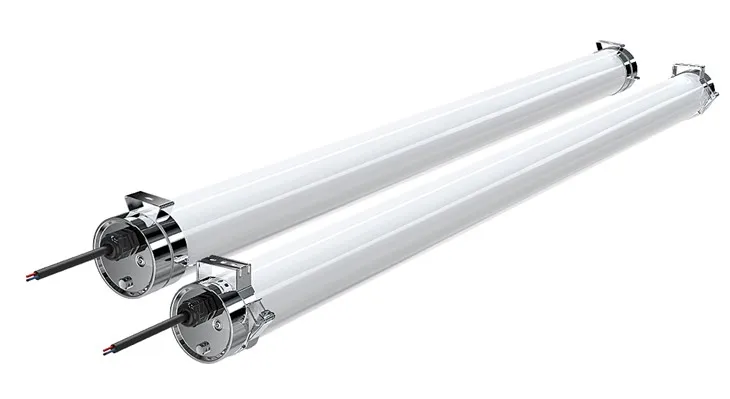
Our Tubar Light is a linear tri - proof light that is commonly used in industrial and commercial applications. It has a long, narrow design that allows for maximum heat dissipation through convection. The housing of the Tubar Light is designed with ventilation channels that run along the length of the fixture, ensuring that air can flow freely around the heat sink.
The Dico Tri - proof Light is another popular product in our range. It is a high - performance tri - proof light that is designed to provide bright and uniform illumination in harsh environments. The Dico Tri - proof Light features a large heat sink that is specifically designed to handle the high heat output of its powerful LED modules.
Testing and Quality Assurance
To ensure that our tri - proof lights meet the highest standards of heat dissipation performance, we conduct extensive testing during the manufacturing process. We use thermal imaging cameras to measure the temperature distribution across the surface of the heat sink and the lighting fixture. This allows us to identify any areas where heat may be accumulating and make adjustments to the design if necessary.
We also test our lights under different operating conditions, including high temperatures and high humidity. This helps us to simulate real - world scenarios and ensure that our products can perform reliably in a variety of environments. Our quality control team closely monitors the manufacturing process to ensure that each light meets our strict quality standards before it is shipped to our customers.
Conclusion
In conclusion, heat dissipation is a critical aspect of the performance and longevity of tri - proof lighting. Our tri - proof lights are engineered to dissipate heat effectively, using a combination of heat sinks, convection, and careful design. By ensuring that our products operate at optimal temperatures, we can provide our customers with reliable, long - lasting lighting solutions that deliver consistent performance in even the most challenging environments.
If you are interested in learning more about our tri - proof lighting products or have any questions about heat dissipation performance, please do not hesitate to contact us. We are always happy to discuss your specific lighting needs and help you find the best solution for your application. We look forward to the opportunity to work with you and provide you with high - quality tri - proof lighting products.
References
- "LED Lighting Handbook" - A comprehensive guide to LED lighting technology, including heat management.
- "Thermal Management in Lighting Systems" - Research paper on the importance of heat dissipation in lighting fixtures.
- Industry standards and guidelines for tri - proof lighting, which often include requirements for heat dissipation performance.