

Hey there! As a supplier of LED tri-proof lights, I've seen a lot of folks scratching their heads over how to adjust the direction of these lights. Well, you're in luck because I'm here to break it down for you in a super easy way.
First off, let's talk about why adjusting the direction of LED tri-proof lights matters. These lights are designed to be tough - they're waterproof, dustproof, and corrosion - resistant. They're used in all sorts of places like factories, warehouses, and even outdoor areas. And getting the right lighting direction can make a huge difference in terms of visibility and energy efficiency.
Why Adjust the Direction?
You might be wondering, "Why should I bother adjusting the direction of my LED tri - proof lights?" Well, think about it. If you're using these lights in a warehouse, you want to make sure that the aisles are well - lit so that workers can easily find what they need. If the lights are pointed in the wrong direction, there could be dark spots, and people might have to use additional lighting, which means more energy consumption and higher costs.
In a factory, proper lighting direction can help workers see what they're doing more clearly, reducing the risk of accidents. And in an outdoor setting, like a parking lot, well - directed lights can improve security by illuminating potential hiding spots.
Different Types of LED Tri - Proof Lights
Before we get into the adjustment process, let's take a look at some of the popular types of LED tri - proof lights that we offer. We have the Twins NCF Light, which is a great option for large - scale lighting. It's got a high - intensity output and can cover a wide area. The Bico Tri - proof Light is another fantastic choice. It's more compact but still packs a punch in terms of lighting power. And then there's the Tubar Light, which is known for its sleek design and efficient performance.
Adjustment Methods
Now, let's get to the main event - how to adjust the direction of these lights.
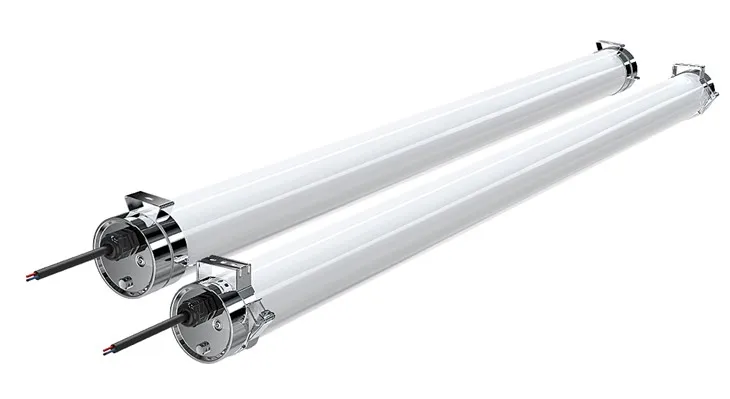

Mounting Bracket Adjustment
Most LED tri - proof lights come with a mounting bracket. This is usually the first place you'll start when adjusting the direction. First, make sure the power is turned off to avoid any electrical hazards. Then, locate the screws or bolts on the mounting bracket. Loosen these just enough so that you can move the light fixture.
For example, if you're using the Twins NCF Light and you want to angle it downwards to focus the light on a specific area, gently tilt the fixture. Once you've got it in the right position, tighten the screws or bolts back up. It's a pretty straightforward process, but make sure you don't over - tighten, as this could damage the bracket or the light itself.
Swivel and Rotation
Some of our lights, like the Bico Tri - proof Light, have a swivel and rotation feature. This allows you to move the light in multiple directions. To use this feature, again, turn off the power. Then, hold the light fixture and start to swivel it left or right. You can also rotate it up or down.
This is really useful if you need to change the lighting direction based on different tasks or if you want to create a more dynamic lighting effect. For instance, in a workshop, you might want to rotate the light to follow your work as you move around.
Adjustable Hinges
The Tubar Light often comes with adjustable hinges. These hinges give you even more flexibility in terms of direction adjustment. Similar to the other methods, turn off the power first. Then, open the hinge mechanism. You can usually do this by pressing a small button or lever.
Once the hinge is open, you can adjust the angle of the light. You can make it wider or narrower depending on your needs. After you're satisfied with the position, close the hinge back up.
Tips for a Successful Adjustment
- Plan Ahead: Before you start adjusting, take a look at the area where the light will be used. Think about what you want to illuminate and how you want the light to spread. This will help you make more informed decisions when adjusting the direction.
- Test the Light: After you've made an adjustment, turn the power back on and see how the light looks. You might need to make some small tweaks here and there to get it just right.
- Keep Records: If you have multiple lights in an area, it can be helpful to keep a record of how each light is adjusted. This way, if you need to make changes in the future, you'll have a reference to go back to.
Conclusion
Adjusting the direction of LED tri - proof lights is not as complicated as it might seem. With a little bit of knowledge and some basic tools, you can get your lights shining exactly where you need them. Whether you're using the Twins NCF Light, the Bico Tri - proof Light, or the Tubar Light, the adjustment methods are pretty similar.
If you're in the market for LED tri - proof lights or have any questions about adjusting their direction, don't hesitate to reach out. We're here to help you get the most out of your lighting solutions. Let's work together to create a well - lit and efficient space.
References
- General knowledge about LED tri - proof lights from industry experience.
- Product manuals of Twins NCF Light, Bico Tri - proof Light, and Tubar Light.